Introduction
Choosing where to plant is one of the most important steps in growing a fruit tree. A tree may suit your climate but still struggle in a shady, crowded, or poorly drained part of your yard.
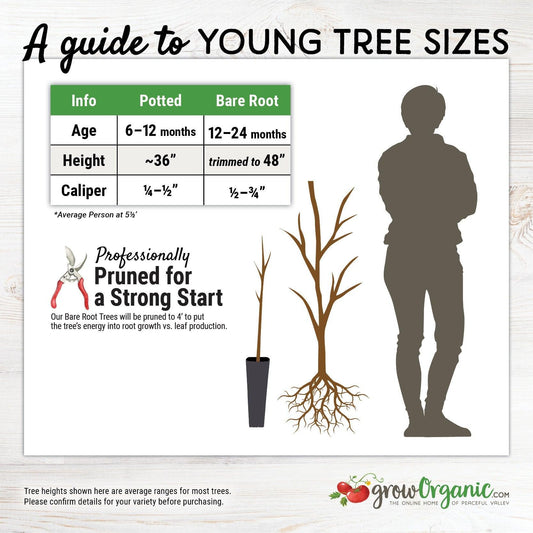
Bare root trees arrive without soil around their roots. Although they are small at planting time, they need a location that will support years of growth. Before digging, check sunlight, drainage, room to grow, and access to water.
Start With Sunlight
Most commonly grown fruit trees grow and produce best in full sun. At least six hours of direct sunlight during the growing season is a useful starting point, but some need more. For example, University of Minnesota Extension recommends at least eight hours for apple trees.
Watch your proposed planting spot in the morning, midday, and afternoon. Buildings, fences, and nearby trees may block more light than you expect. Remember that a spot that looks sunny in winter may become shaded when nearby trees grow their leaves.
Follow the sunlight recommendations for your particular fruit tree. Choose a sunny location that also provides good drainage and enough space.
Check Soil Drainage Before Planting
Good drainage means excess water can move through the soil instead of remaining around the roots. Roots need both moisture and oxygen. Soil that stays saturated can leave too little air for healthy root growth.
Look for these warning signs:
- Water that collects or remains after rain.
- Low areas that receive runoff from nearby ground.
- Heavily compacted soil, such as an area regularly driven over.
- Dense soil layers that prevent water from moving downward.
If you are unsure about drainage, ask your local Cooperative Extension office how to assess your soil. A drainage test can help, but its results need to be interpreted for the soil and testing conditions.
Do not assume that digging a deeper hole or replacing the soil inside it will solve a drainage problem. A better location may be the simplest choice. In some situations, a broad raised mound or berm can help, but seek local guidance before building one.
Watch for Frost Pockets
A frost pocket is a low area where cold air collects. On calm, clear nights, it can become colder than nearby higher ground. This matters in spring because freezing temperatures can damage developing flowers.
When comparing planting spots, look for hollows and low corners where cold air may settle. A location that lets cold air move downhill and away can reduce this risk, although no location guarantees protection from frost.
Conditions can vary within the same yard. Slopes, walls, buildings, and exposure to wind can create small areas that are warmer or cooler than their surroundings.
Plan for the Tree’s Mature Size
Choose spacing based on the tree’s expected mature size, not its size when it arrives. Check both the variety and rootstock. The rootstock is the root portion onto which a fruit variety is grafted, and it can strongly influence the tree’s size.
Your pruning and training method also matters. A freestanding tree needs a different arrangement from an espalier, which is trained into a flat shape along supports.
Before choosing a location, consider:
- Space between the mature canopy and buildings or fences.
- Room to walk around the tree for pruning and harvesting.
- Shade and crowding from nearby trees as they grow.
- Overhead utility lines that branches could eventually reach.
- Clearance for pathways and vehicle access.
- Space for a compatible pollination partner, if the variety needs one.
There is no single spacing distance that suits every fruit tree. Use recommendations for your cultivar, rootstock, and training method.
Make Sure Water Is Easy to Reach
A young tree needs reliable moisture while its roots become established. Before planting, check that a hose or irrigation system can reach the planting area.
Plan to check the soil around the roots regularly. Watering needs change with rainfall, temperature, and soil type, so avoid relying on one fixed schedule throughout the year. The goal is to prevent the roots from drying out without keeping the soil constantly waterlogged.
Match the Site to the Specific Tree
Check these details before making your final choice:
- Winter hardiness: Is the tree suited to your area’s winter temperatures?
- Winter chill: Does your climate provide the chilling needed by the variety?
- Mature size: Will the tree fit the available space?
- Soil needs: Are drainage and other soil conditions suitable?
- Pollination: Does it need another compatible variety flowering at the same time?
USDA hardiness zones describe average annual extreme minimum winter temperatures. They do not measure winter chill accumulation or tell you the date of your last spring frost. Check these factors separately.
Use the Bare Root Tree Selection Guide to help choose a tree and the Fruit Tree Chill Hours guide for winter-chill questions.
If Your Tree Arrives Before the Site Is Ready
Do not leave bare roots exposed while you finish preparing the site. Keep them protected with damp packing material in a cool, nonfreezing location for a short delay.
Heeling in is another temporary option: the roots are covered with moist material until the tree can be planted in its permanent location. Follow the Heeling In Bare Root Trees guide for more information.
Shop Bare Root Trees
Once you understand your planting site, compare suitable varieties in Grow Organic’s Bare Root Trees collection.
Conclusion
A suitable planting spot gives your fruit tree a better start. Look for adequate sunlight, well-drained soil, room for mature growth, and convenient water access. Check frost exposure and the needs of your chosen variety before planting. If drainage or spacing is uncertain, ask for local advice before committing to a location.
FAQs About Choosing a Location for Your Bare Root Tree
How much sun does a bare root fruit tree need?
Most commonly grown fruit trees perform best in full sun. At least six hours of direct sunlight during the growing season is a useful starting point, but some need more. For example, apple trees are commonly recommended to receive at least eight hours. Check guidance for your species and local climate.
Can I plant a fruit tree in a low spot?
A low spot may collect water, cold air, or both. Check drainage after rain and consider whether cold air can settle there on spring nights. A better-drained location with less frost exposure is generally preferable.
How far should a fruit tree be from a house or fence?
There is no single distance for every fruit tree. Follow spacing recommendations for the cultivar, rootstock, and training method. Allow room for the mature canopy and access for pruning and harvesting, and consider shade from nearby structures.
What if my soil drains poorly?
Identify the cause before planting. Choose a better-drained location or ask your local Cooperative Extension office whether drainage improvements or a broad raised mound would help. Digging a deeper hole or replacing only the soil inside it may not solve the problem.