

Peach leaf curl is caused by Taphrina deformans and affects peaches and nectarines. The central management fact is timing: infection occurs as buds open during cool, wet conditions, while the distorted leaves become visible later. Once symptoms appear, a spray cannot restore infected leaves.
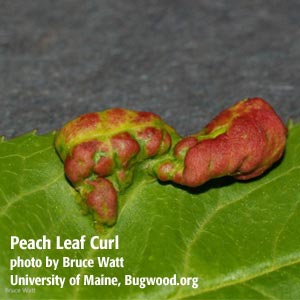
How to recognize peach leaf curl
- Thickened, puckered, or curled young leaves
- Red, pink, yellow, or pale-green discoloration
- A velvety surface as the fungus produces spores
- Premature leaf drop after severe infection
- Occasional distortion of young shoots or fruit
Do not diagnose every curled leaf as peach leaf curl. Aphids, herbicide injury, water stress, nutrient problems, and other diseases can distort foliage.

Disease lifecycle
The fungus persists on bud and bark surfaces. Rain or irrigation can move spores onto opening tissue. Infection is favored by cool, wet weather during bud development. Symptoms appear after infected leaves expand, which is why visible spring treatment is generally too late for those leaves.
Prevention timing
Where the disease is recurring, preventive treatment is generally applied during dormancy after leaf fall and before susceptible buds open. The exact number and timing of applications depend on disease history, winter rainfall, local guidance, and the label of the selected product.
Do not rely on fixed dates such as Thanksgiving, January 1, or February. Bud stage varies by climate, elevation, and season.
Selecting a product
Use only a fungicide labeled for peach leaf curl on the crop and site. Copper formulations and other active ingredients differ in metallic copper equivalent, concentration, application rate, permitted timing, protective equipment, temperature limits, and compatibility with oils or other products. The current label—not a blog recipe—is the source of truth.
Do not add horticultural oil as a “sticker” unless both labels allow the combination. Never substitute a product that is not registered for the intended residential or orchard use.
What to do after symptoms appear
- Maintain appropriate root-zone moisture without saturation.
- Avoid forcing soft growth with unnecessary nitrogen.
- Thin an excessive crop if defoliation leaves too little foliage to support it.
- Monitor the second flush of leaves and overall tree vigor.
- Record disease severity and plan the next dormant preventive window.
Removing individual infected leaves does not eliminate the fungus and can further reduce photosynthetic area. Prune only for a separate structural or sanitation reason.

Variety selection
Susceptibility differs among cultivars, but “resistant” does not mean immune. Current availability changes, so browse peach trees and nectarine trees, then use product pages and Tree Characteristics for offered-tree details.
Related guidance
Watch the Peach Leaf Curl video for a visual overview. For other symptoms, use Diagnosing Peach Tree Problems Beyond Leaf Curl.


14 comments
Dan, you can remove the leaves that are affected by the curl and put them in the trash (not your compost pile). If you use pruners to remove the leaves, make sure that you disinfect the pruners. You don’t want to transfer anything to the healthy tree. I would not destroy the tree, just treat them next winter, clean up any leaves around the trees, don’t handle the diseased tree, then handle the healthy tree.
Thanks for your suggestions about peach leaf curl. One you didn’t mention for the backyard gardener, which has worked well for me, is to simply pinch off any sign of curl on the leaves as it first appears. I sometimes pinch off the affected parts only, leaving the remainder of the leaves, and sometimes pinch or cut off whole leaves and new shoots obviously stricken. As I work my way around the tree, I put the infected growth in a paper sack, which then goes into my woodstove to prevent further contamination.
This pruning lets the tree continue to grow normally and eventually overwhelm the fungus for the season, as conditions dry. I have had great crops of peaches using this method for more than ten years. The fungus generally has returned the following years, since I live near the coast along a wetlands in central California (ideal fungal conditions, I would say), but does seem to be diminishing.
I have a young peach tree seedling, about 2-3’ tall that I grew from a pit/seed and does not yet bear fruit. It has this leaf curl problem. Is there someway to treat the leaves and tree now instead of waiting until fall/winter or next spring?. It pains me to see it struggling and not being able to do something!
M, well the infected leave will eventually fall off and you should clean up all of the dead leaves. Put it in your trash and not your compost pile. You can make sure that your tree has sufficient nutrients to recover from losing the leaves. So add some fruit tree fertilizer. Some people like to spray their trees with compost tea as well as fertilizing. All will help the tree be as strong as it can be to recover from the disease.